

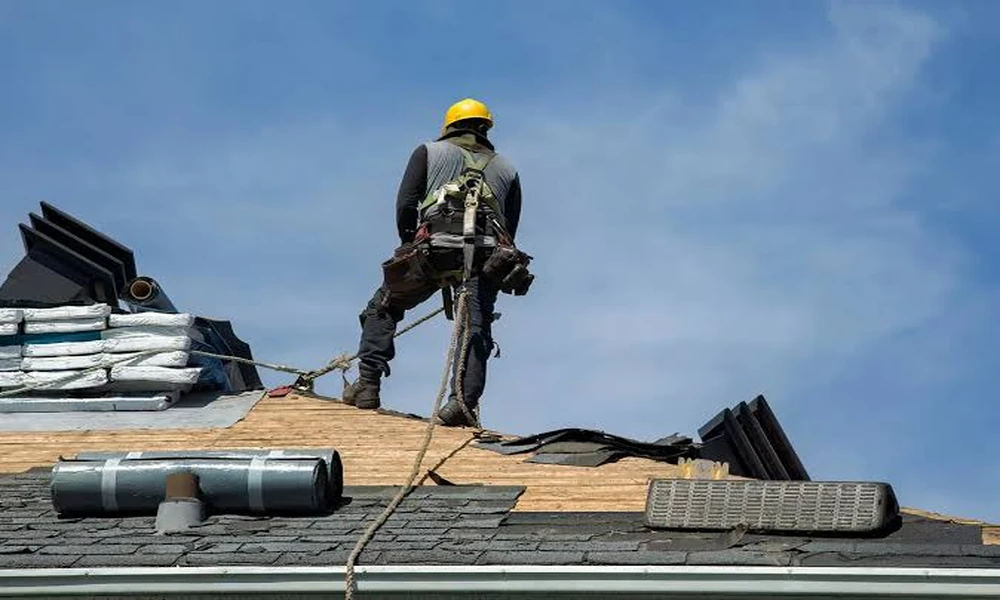
Your roof is one of the most important components of your home, protecting everything beneath it from rain, wind, temperature changes and the unpredictable British weather. Yet, despite its importance, roofing maintenance is something many homeowners only think about when a problem becomes impossible to ignore.
Perhaps you’ve noticed a damp patch appearing on an upstairs ceiling, discovered broken tiles in the garden after a storm or spotted an area of your roof that looks noticeably worse than the rest.
Whatever the warning sign, one question often comes to mind: should you repair the existing roof or invest in a complete replacement?
For homeowners in Cheam and the surrounding Surrey area, the answer depends on several factors, including the age of the roof, the type of damage, the condition of the underlying structure and the likely long-term cost of each option.
Understanding these considerations can help you avoid unnecessary expenditure while ensuring your property remains properly protected.
Understanding the Difference Between Roof Repairs and Replacement
Before deciding which option is appropriate, it’s important to understand what each involves.
Roof repairs generally focus on resolving specific defects while preserving the majority of the existing roofing system.
These might include replacing broken or missing tiles, repairing lead flashing, fixing a leaking roof valley or addressing damage to a relatively small section of roofing.
A roof replacement, on the other hand, involves removing substantial portions of the existing roof covering and installing new materials. Depending on the project, this may also include replacing battens, underlay, insulation or other components.
The distinction matters because a relatively minor problem does not automatically justify replacing an entire roof.
Equally, repeatedly repairing a roofing system that has reached the end of its useful life may become increasingly expensive.
The objective should always be to identify the most practical and cost-effective long-term solution rather than simply choosing the cheapest immediate option.
1. Consider the Age and Condition of Your Roof
The age of your roof is an important consideration, although it should never be the sole factor determining whether replacement is necessary.
Different roofing materials have different expected lifespans.
Traditional natural slate, clay tiles, concrete tiles and various flat roofing systems all perform differently depending on their quality, installation and exposure to the elements.
A well-maintained natural slate roof, for example, may remain serviceable for many decades, while certain flat roofing systems have shorter expected service lives.
However, these are general observations rather than guarantees.
A relatively modern roof can develop serious problems if it was poorly installed, while an older roof may remain perfectly functional if it has been properly maintained.
What should homeowners look for?
Rather than concentrating exclusively on age, consider the overall condition of the roof.
Questions worth asking include:
- Are most of the roof tiles or slates still securely positioned?
- Is damage limited to one identifiable area?
- Have previous repairs successfully resolved problems?
- Are leaks appearing in several different locations?
- Is there evidence of deterioration beneath the roof covering?
- Are the roofing materials becoming increasingly difficult to replace?
If the majority of the roof remains in good condition, localised repairs may provide an effective solution.
If deterioration is widespread, however, replacement may offer better long-term value.
2. Identify Whether the Damage Is Localised or Widespread
One of the clearest distinctions between a repairable roof and one requiring more extensive work is the extent of the damage.
A few slipped tiles following strong winds represent a very different situation from a roof with widespread deterioration across several elevations.
Localised roofing problems
Minor or isolated defects might include:
- A small number of cracked or missing tiles.
- Damaged flashing around a chimney.
- A leaking roof valley.
- A defective ridge tile.
- Localised storm damage.
- A blocked or damaged drainage outlet.
In many circumstances, an experienced roofing contractor can investigate these issues and carry out targeted repairs.
For example, replacing several broken tiles may restore the roof’s weather resistance without disturbing the remainder of the covering.
Similarly, a damaged section of lead flashing might be repairable without requiring major alterations to the surrounding roof.
Widespread roofing deterioration
More extensive problems might include:
- Large areas of failing roof tiles or slates.
- Repeated water penetration in different locations.
- Significant deterioration of battens or underlay.
- Extensive damage caused by prolonged moisture exposure.
- Multiple previous repairs that have failed to resolve recurring defects.
Where these conditions exist, replacing the roof covering may be more practical than continuing to repair individual sections.
However, a thorough inspection remains essential. Visible deterioration does not always reveal the full condition of the roof structure beneath.
3. Don’t Ignore Recurring Roof Leaks
A leaking roof is one of the most common reasons homeowners contact a roofing contractor.
Unfortunately, locating the source of a leak is not always straightforward.
Rainwater can enter through damaged tiles, defective flashing, poorly sealed roof penetrations or faults around roof valleys.
Once inside the roof structure, water may travel along timbers, membranes or other surfaces before becoming visible on an internal ceiling.
This means the damp patch you can see indoors may be some distance from the actual point of entry.
When is a leak repairable?
If a leak results from one identifiable defect, a targeted repair may be sufficient.
For instance, replacing damaged flashing or repairing a small section of roof covering could resolve the problem without requiring major work.
However, if leaks repeatedly occur in different locations, it may indicate that the roofing system has more extensive underlying problems.
Homeowners should also be cautious about repeatedly applying temporary sealants or surface treatments without identifying the cause of water penetration.
Although some temporary repairs can provide useful short-term protection, they may not address the underlying defect.
Professional investigation is particularly important where water penetration has continued for an extended period, as moisture may have affected insulation, timber or internal finishes.
4. Compare the Long-Term Costs, Not Just the Initial Price
Cost is understandably one of the biggest factors influencing roofing decisions.
A roof repair is typically less expensive than a complete replacement when the damage is genuinely limited in scope.
However, the lowest initial quotation is not always the most economical option over the longer term.
Imagine a homeowner pays for several separate repairs over a relatively short period.
If the roof continues developing new problems because the overall covering has deteriorated, those costs can accumulate.
The homeowner may eventually need a replacement anyway, having already spent a significant amount on repairs.
Conversely, replacing an otherwise serviceable roof simply because it has developed one minor defect could represent unnecessary expenditure.
Questions to consider before making a decision
When comparing repair and replacement quotations, consider:
- What is the estimated cost of the proposed repair?
- Is the repair likely to provide a lasting solution?
- How much of the existing roof remains in satisfactory condition?
- Are additional defects likely to become apparent?
- What is the expected remaining service life of the existing roof?
- Would replacement provide meaningful improvements to insulation or weather resistance?
- Does the quotation include scaffolding, waste disposal and other necessary work?
Access costs are particularly important.
On some properties, scaffolding may represent a substantial proportion of the overall project cost.
If extensive access equipment is already required, it may be worth considering whether other necessary roofing maintenance should be undertaken at the same time.
Nevertheless, additional work should only be recommended where there is a genuine need.
Experienced providers of residential roofing services should be able to explain the condition of the existing roof and outline the practical advantages and limitations of each option.
5. Consider the Type of Roofing Material
The materials used on your roof influence both the available repair options and the likely cost of replacement.
Properties throughout Surrey feature a mixture of traditional and modern roofing systems, each with different maintenance requirements.
Clay and concrete roof tiles
Clay and concrete tiles are common on pitched residential roofs.
Individual damaged tiles can often be replaced, provided compatible materials are available and the surrounding roof remains in satisfactory condition.
However, widespread damage, deteriorating fixings or problems with the underlying battens may require more extensive intervention.
Natural slate roofs
Natural slate is commonly associated with traditional properties and can offer exceptional longevity when correctly installed.
Individual slates may be replaced or refixed, although matching existing materials and assessing the condition of the fixings can require specialist expertise.
Where slate coverings are otherwise sound, carefully targeted repairs may help preserve the roof’s original character.
Flat roofing systems
Flat roofs are frequently used on garages, extensions, dormers and commercial buildings.
Common systems include bituminous coverings, single-ply membranes and liquid-applied waterproofing systems.
The suitability of repairs depends on the material, the condition of the existing covering and the nature of the defect.
A localised seam failure or damaged section may be repairable, while widespread deterioration could make replacement the more appropriate option.
The exact repair method should always be compatible with the existing roof covering.
6. Look for Damage to the Underlying Roof Structure
The visible roof covering provides protection against the weather, but it is only part of the complete roofing system.
Beneath the tiles or slates, components such as battens, underlay and structural timbers also play essential roles.
If a leak remains unresolved, moisture can gradually affect these concealed materials.
In some cases, homeowners may not realise the extent of the deterioration until roofing materials are removed for inspection.
Warning signs of underlying problems
Potential indications include:
- Persistent dampness within the loft.
- Visible timber decay.
- Sagging or uneven sections of roofing.
- Extensive deterioration of accessible underlay.
- Repeated tile movement caused by defective supporting components.
Some symptoms may have causes unrelated to roof-covering failure, including condensation or structural movement.
A professional assessment can help establish the cause before unnecessary work is undertaken.
If structural components have deteriorated significantly, replacing damaged roof coverings alone may not resolve the problem.
Any underlying defects will need to be addressed as part of the proposed roofing work.
7. Think About Energy Efficiency and Insulation
A roof replacement can sometimes provide an opportunity to improve the energy efficiency of a property.
Older homes may have insufficient roof insulation or construction details that no longer meet modern expectations.
Where substantial roofing work is planned, homeowners may be able to improve insulation, ventilation and other aspects of the roof’s thermal performance.
However, the appropriate approach depends on the existing construction and the proposed work.
Adding insulation without considering moisture movement or ventilation requirements can cause problems, particularly in older buildings.
Significant roofing alterations may also trigger requirements under current building regulations.
For example, replacing a substantial proportion of a roof’s thermal element can create obligations relating to energy efficiency, subject to the applicable regulations and exemptions.
These requirements should be considered during planning rather than after work has begun.
For minor roof repairs, a complete insulation upgrade may not be necessary or financially justified.
The decision should reflect the scale of the project, the property’s construction and the homeowner’s long-term plans.
8. Know When Professional Roof Repairs Are Necessary
Some roofing problems develop gradually, while others require urgent attention.
A small area of cracked pointing or minor gutter deterioration may allow time for planned maintenance.
An active leak affecting electrical installations, however, requires much more urgent action.
Similarly, loose roofing materials following severe winds can create a risk to people and property below.
Signs that warrant prompt professional attention
Homeowners should arrange an assessment if they notice:
- Water entering the property during rainfall.
- Missing tiles following a storm.
- Loose materials that may fall from the roof.
- Rapidly expanding damp patches.
- Significant visible sagging.
- Repeated leaks despite previous repairs.
Attempting to inspect or repair a roof without appropriate equipment and experience can be dangerous.
Even relatively low roofs can present serious fall risks, while fragile surfaces and weather-damaged structures introduce additional hazards.
Homeowners should avoid climbing onto the roof and instead seek appropriate professional assistance.
For less urgent problems, an inspection can still help determine whether maintenance is needed before the next period of severe weather.
9. Choosing a Roofing Contractor in Cheam
Whether your property requires a small repair or a complete roof replacement, choosing a suitable contractor is an important part of the process.
A reputable roofer should be willing to explain the suspected problem, describe the proposed solution and clarify the materials and work involved.
For homeowners seeking experienced roofers in Cheam, Infinite Roofing provides roofing services for residential properties in Cheam and the surrounding area.
Before committing to work, it is sensible to obtain a written quotation outlining the agreed scope.
This should identify the work to be carried out, the principal materials involved and any important assumptions or exclusions.
For larger projects, homeowners should also establish whether scaffolding, waste removal, relevant building regulations requirements and other associated costs have been included.
A contractor’s relevant experience matters particularly when working with traditional roofing materials or more specialist roof coverings.
Clear communication is equally important.
You should understand why a repair or replacement is being recommended and what result you can reasonably expect.
Be cautious of anyone insisting that an entire roof must be replaced without offering a clear explanation of the defects or providing sufficient evidence to support that recommendation.
10. Preventative Maintenance Can Extend the Life of Your Roof
One of the most effective ways to reduce expensive roofing problems is to identify small defects before they become more serious.
Routine maintenance cannot prevent every roofing issue, but it can help prolong the useful life of existing materials and reduce avoidable deterioration.
Homeowners can take several straightforward steps.
Keep gutters and drainage systems clear
Blocked gutters can cause rainwater to overflow onto walls and vulnerable building details.
Removing accumulated leaves and debris helps maintain effective drainage.
Check the roof after severe weather
Strong winds may dislodge tiles or damage exposed roof components.
A visual inspection from ground level can help identify obvious defects.
Monitor loft spaces
Accessible loft areas can reveal early signs of water penetration, condensation or timber deterioration.
Investigate unusual dampness rather than assuming it will disappear.
Deal with minor defects promptly
Small problems can become more expensive if water is repeatedly allowed to penetrate the building.
Timely roofing repairs and maintenance can help address developing defects before they compromise larger areas of the roof.
Keep records of previous roofing work
Knowing when your roof was installed, which materials were used and what repairs have been completed can be valuable when assessing future maintenance requirements.
For older properties, maintenance records may also prove helpful when selling the home or planning renovations.
11. Should You Repair or Replace Your Roof Before Selling?
If you’re planning to put your property on the market, roofing condition can become an important consideration.
Buyers may be concerned about visible damage, previous leaks or evidence of deterioration identified during a property survey.
However, replacing an entire roof immediately before selling is not necessarily the best financial decision.
If the roof remains structurally sound and only requires minor repairs, addressing those defects may be sufficient.
Where significant problems exist, obtaining a professional assessment and written quotation can help clarify the likely cost of remedial work.
This information may be useful during negotiations with prospective buyers.
Homeowners should also retain documentation for completed repairs and replacements, including relevant guarantees, invoices and building regulations paperwork where applicable.
These records can help demonstrate that roofing issues have been investigated and addressed appropriately.
Ultimately, the decision should be based on the roof’s actual condition, the expected cost of necessary work and the homeowner’s circumstances.
Final Thoughts
Deciding whether to repair or replace a roof is rarely as simple as comparing two prices.
The correct solution depends on the age and condition of the roofing materials, the extent of existing damage, the integrity of the underlying structure and the likely long-term performance of any proposed repair.
For homeowners in Cheam and the surrounding Surrey area, the most sensible approach is to investigate roofing problems promptly and seek clear professional advice before committing to substantial expenditure.
A well-executed repair can extend the life of an otherwise sound roof, while a carefully planned replacement can provide lasting protection when an existing roofing system has deteriorated beyond economical repair.
By understanding the warning signs, maintaining their roofs properly and making informed decisions about necessary work, homeowners can protect their properties while avoiding unnecessary costs.