

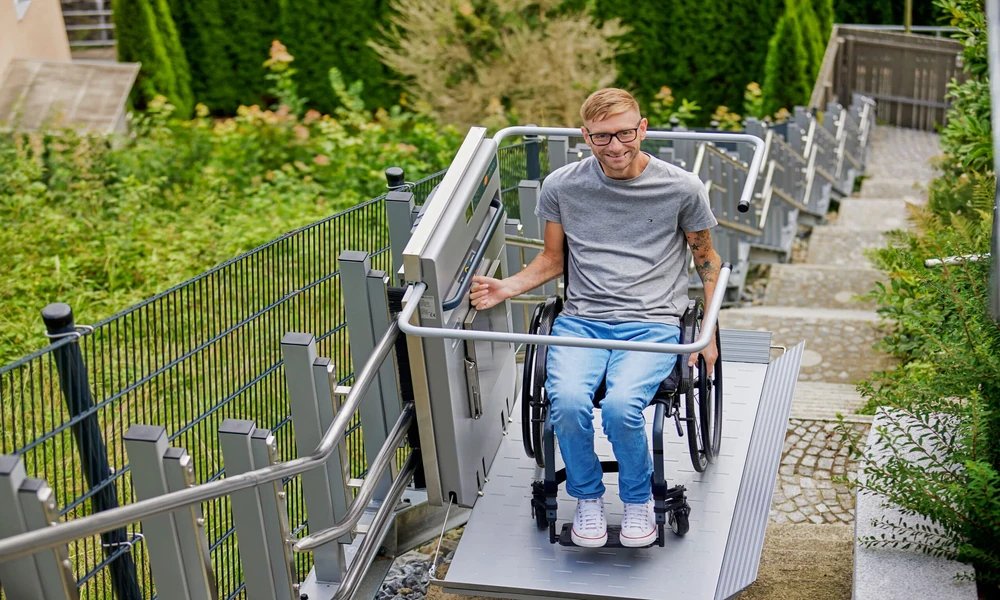
Accessibility in multi-level buildings is often thought of as a matter of having a lift, but many buildings have smaller changes in level that a lift does not reach: a few steps up to a stage, down to a lower dining area or between sections of an old building. For people with limited mobility, those few steps can be a complete barrier. A handicap chair lift is one of several practical ways to remove that barrier, helping people move between levels safely and with dignity.
The Problem With Split Levels
Many older buildings in Singapore, including shophouses, places of worship and community buildings, were designed long before accessibility was a priority. Renovations and extensions often add level changes, and modern designs sometimes include them for visual effect. Each of these creates a point where people who cannot manage stairs either need help or are excluded. Removing these barriers benefits wheelchair users, older people, those recovering from injury and anyone carrying heavy items. It also reduces the number of times staff have to step in and help, which is better for visitors and for the business.
Types of Chair and Platform Lifts
Several types of lift can address level changes, each suited to different situations. The main options are:
- Seated stair lifts, which carry a seated user along a rail fixed to the stairs
- Inclined platform lifts, which carry a wheelchair along the staircase
- Vertical platform lifts, which raise a wheelchair straight up beside the stairs
- Through-floor lifts, which carry users between floors in homes
The right choice depends on whether users can transfer from a wheelchair and on the space available.
When a Seated Lift Fits
Seated chair lifts suit people who can walk short distances and transfer onto a seat but find stairs difficult or unsafe. They are compact and fold away when not in use, which makes them suitable for homes and smaller buildings. In multi-level buildings with frequent public use, however, a seated lift may not meet the needs of wheelchair users, who would need to transfer and leave their wheelchair at the bottom of the stairs.
When a Platform Lift Is Better
For wheelchair users, platform lifts provide independent access without transferring. Inclined platforms travel along the staircase and fold flat when not in use, while vertical platforms need floor space beside the stairs. In public and commercial buildings, platform lifts are generally the more inclusive option, because they serve both wheelchair users and people with other mobility needs. A handicap chair lift that carries a wheelchair can also help people with prams or trolleys.
Regulations and Standards
In Singapore, the Code on Accessibility in the Built Environment, published by the Building and Construction Authority, sets out requirements for barrier-free access in buildings. New buildings and major renovations must meet these requirements, and existing buildings are increasingly expected to improve access. Standards such as EN 81-40 for stair lifts and inclined platforms and EN 81-41 for vertical lifting platforms are often referenced for safety. Building owners should check the requirements that apply to their project with a qualified professional.
Safety Features
Lifts used in public and shared buildings face heavier use than those in homes, so safety features matter even more. Look for:
- Safety edges that stop the lift when they meet an obstacle
- Barriers or ramps that prevent the wheelchair rolling off
- Emergency stop buttons and alarm systems
- Battery backup for power interruptions
- Controls usable from a seated position
Clear signage and good lighting around the lift help users find and operate it safely.
Installation Considerations
Installing a chair or platform lift in an existing building usually requires less work than a passenger lift, but planning is still needed. The structure must support the rail or platform, and power must be available. In heritage or conservation buildings, installation may require approval and careful design to avoid damaging protected features. Fire escape routes must remain clear, and the folded lift must not obstruct the staircase width required for evacuation.
Maintenance and Training
A lift is only useful if it works. Regular maintenance, carried out by trained technicians, keeps the lift safe and reliable. Building staff should know how to operate the lift, how to help users if needed and what to do if it stops mid-journey. Keep a simple log of services, faults and repairs, so recurring problems are spotted and raised with the service provider before they cause a breakdown. In buildings with many visitors, it is useful to display contact details for assistance near the lift.
Planning Accessible Routes
A lift addresses one level change, but accessibility depends on the whole route. Consider entrances, door widths, corridors, toilets and seating areas on each level. Users should be able to reach the lift easily and continue their journey without meeting further barriers. When consulting a supplier of stair lifts and wheelchair platform lifts, ask them to review the full route and identify any other obstacles.
Start With a Walkthrough
Walk the building with someone who uses a wheelchair or mobility aid and note every point where they need help. That list is the most reliable brief you can give a supplier.