

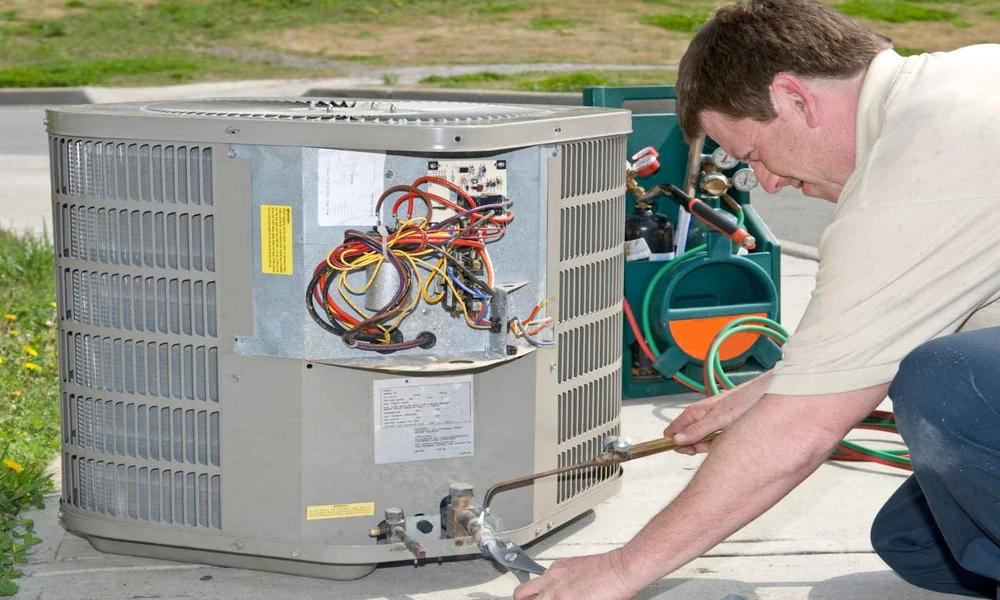
Most homeowners discover an air conditioning problem the same way: by opening a utility bill that looks nothing like last summer’s. The house feels roughly as comfortable as always, the thermostat has not moved, and yet the amount owed has climbed for no obvious reason.
That gap between what you are paying and what you are getting is the clearest financial signal a cooling system ever sends. Answering it promptly is one of the few home repairs that gives money back rather than simply taking it.
Reading the Warning Signs on Your Bill
A rising bill during a normal summer usually means the system is consuming more electricity to deliver the same result. Something inside it has lost capacity, and the unit is compensating by staying on longer than it should.
Other clues tend to appear alongside the numbers. Rooms that never quite reach the setting, air from the vents that feels less cold than it used to, a unit that seems to run at all hours, and unfamiliar noises during startup all point toward the same underlying story.
The temptation is to accept these changes as the natural aging of the equipment. Often they are not. They are symptoms of a specific fault that a technician can identify and correct.
Tracing Where the Extra Electricity Goes
Cooling costs come down to two things: how much power the unit draws and how many hours it spends drawing it. A healthy system finishes its work and shuts off, which keeps that second number in check.
When a component weakens, the system loses efficiency at the point where it exchanges heat. Perhaps refrigerant has escaped through a small leak, or a condenser coil is packed with dirt, or a blower is no longer moving the volume of air the design assumes.
The unit cannot recognize the deficiency. It simply keeps running toward a target it now reaches slowly, and every extra minute of operation registers on your account.
Electrical faults produce their own waste. A tired capacitor forces the compressor to strain each time it starts, pulling heavy current at the very moment the system is least efficient.
Weighing the Cost of Waiting
Postponing a repair feels prudent in the moment, but the arithmetic rarely supports it. The inflated portion of your bill repeats every month the fault goes uncorrected, which means the true cost of waiting compounds across the hottest stretch of the year.
Handle it early and the savings run through the entire cooling season, often covering a substantial share of what the repair cost in the first place. Handle it in autumn and you have paid the premium all summer for nothing.
There is a mechanical cost as well. Components under constant strain fail sooner, and stress tends to migrate toward the compressor, the single most expensive part in the system.
Deciding Between Repairing and Replacing
Sometimes the honest answer is not a repair at all. An older system with a history of service calls may cost more to keep alive than to replace, particularly if its efficiency has fallen well behind current equipment.
A trustworthy contractor will tell you that plainly. A company such as Airco can measure how the system is actually performing, weigh the repair against the age and condition of the unit, and recommend the option that fits your home and budget rather than the largest invoice. That kind of candor is worth looking for, since the goal is lower lifetime cost, not simply a fix today.
Ask about the equipment’s remaining useful life, what a replacement would do for your monthly bills, and whether your ductwork suits the system you have.
Keeping Efficiency After the Fix
A repair restores performance, and a little upkeep protects it. Change filters on schedule, keep vegetation and debris clear of the outdoor unit, and book seasonal maintenance so small faults are caught before they reach your bill.
Comfort and cost are not opposites. A well-maintained air conditioner delivers both, and calling early when something seems off is usually the cheapest decision available to you.