

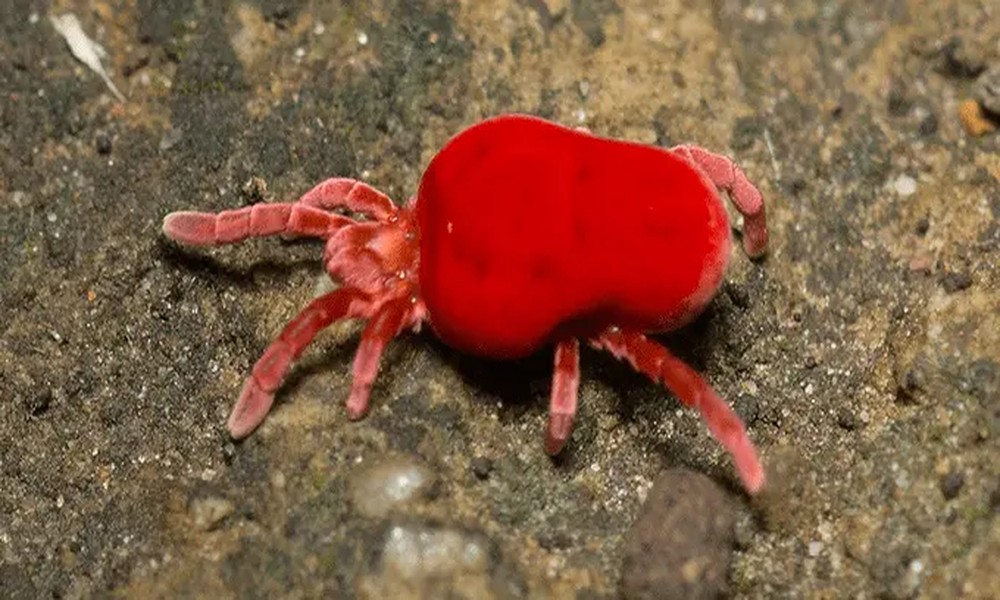
The first warm, wet stretch of April produces a wave of small, confusing pests that most Kansas City homeowners have never consciously seen before and almost always misidentify. Tiny black specks jumping across a bathroom tile. Rust-colored mites crawling up the south side of a light-colored house in numbers large enough to leave streaks when wiped. The first dark ants trailing through a kitchen along a line that did not exist two weeks earlier. Kansas City pest control companies with long local histories, including ZipZap Termite & Pest Control in Lawson, field the same set of calls every spring, and most of them turn out to involve three or four specific species that behave predictably once a homeowner knows what to look for. Identification is usually the hardest part. The fix is often simpler than the sighting suggests.
Springtails: Not Fleas, and Not a Pest Problem on Their Own
The most common misidentification every April involves springtails (order Collembola). They are small, usually about 1 to 2 millimeters, gray to black, and equipped with a furcula, a forked structure under the abdomen that releases like a spring to launch the insect several inches into the air. That jumping motion is almost always what prompts the call, because homeowners assume they have fleas.
Springtails are not fleas, are not parasites, and do not bite, sting, or carry disease. They feed on fungi, algae, decaying plant matter, and moisture-associated organic material. Populations appear indoors when conditions near a moisture source support their biology. The insects themselves are a symptom. What produced them is the actual problem.
Common Kansas City springtail triggers include overwatered houseplants, persistent condensation under sinks, leaky pipes behind bathroom walls, damp basement corners, improperly graded exterior soil channeling water toward the foundation, and crawl spaces with high humidity. An indoor springtail sighting that appears suddenly and in significant numbers is nearly always downstream of a moisture failure that needs attention anyway.
Treatment starts with moisture correction. Addressing the water source eliminates the population over a few weeks without any pesticide application. A targeted non-repellent residual can accelerate the process in persistent cases, but spraying without fixing the moisture is temporary.
Clover Mites: Red Streaks on the Siding
Clover mites (Bryobia praetiosa) appear in staggering numbers on the south- and west-facing walls of Kansas City homes during warm spring afternoons. They are smaller than most homeowners expect, about 0.75 millimeters, rust red to dark reddish-brown, and so numerous that they can cover window frames, sills, and patio stones in concentrated bands.
They are not biting pests. They do not damage structures. They feed on lawn grasses, clover, dandelions, and other yard vegetation, and they migrate to warm walls during spring temperature swings. The staining problem, the specific reason homeowners call, comes from what happens when they are crushed. A streak of red across a white window frame or light-colored curtain is clover mite pigment, not blood, and it stains.
The treatment is exterior and physical. Vacuuming clusters on windowsills (not wiping or crushing them) removes the population without staining. A three-foot vegetation-free buffer strip of gravel or mulch along the south and west sides of the home discourages migration. Exterior residual treatment of the foundation line and the lower two or three feet of siding, applied in early April before populations build, handles heavy infestations on lots with extensive lawn contact.
Indoor populations die quickly because clover mites cannot sustain themselves inside. The visual presence is dramatic, the actual risk is cosmetic.
Pavement Ants and Their Spring Budding
Pavement ants (Tetramorium immigrans) are the small dark brown to black ants that begin appearing indoors through floor cracks, door thresholds, and along baseboards as soon as outdoor temperatures warm. They are not native carpenter ants and do not cause structural damage. They nest under slabs, driveways, sidewalks, and patios, and forage indoors for food scraps and moisture.
Spring activity often represents colony budding, where a secondary reproductive female leads workers to a new nest site. This is the reason a single spring ant trail can suddenly turn into two or three separate trails through the house within a couple of weeks.
Treatment depends on nest access rather than visible ant control. Spraying the trail kills the ants walking on the surface and rarely affects the colony, which usually sits several feet away under concrete. Non-repellent baits carried back to the colony by foraging workers produce full colony elimination over one to three weeks. Spot treatment of cracks where the ants emerge, combined with exterior perimeter application to the foundation, handles the migration zone. Sealing slab cracks and expansion joints reduces re-entry in following years.
Other Spring Arrivals Worth Knowing
A few additional species show up in smaller numbers each Kansas City spring and get misidentified regularly.
Overwintered stink bugs and Asian lady beetles that entered the previous fall begin emerging from wall voids as interior heating and sun-warmed exterior walls raise temperatures. These are the same insects the fall exclusion work was supposed to handle, finishing their indoor residency rather than arriving fresh.
Millipedes and sowbugs (pillbugs) push out of saturated soil after heavy spring rains and end up along basement walls and garage floors. Like springtails, they are moisture indicators rather than structural pests. Correcting drainage solves the problem.
Ground beetles, usually jet-black and shield-shaped, wander indoors through gaps in foundation seals and door sweeps. Individual specimens are harmless and can be picked up with a paper towel. Repeat appearances indicate an access point that belongs on a structural inspection list.
When a Spring Invader Is Actually Pointing at Something Structural
Most spring invaders are a nuisance rather than a problem. The exception is when the sighting points at a moisture source that supports multiple species. A bathroom producing springtails, a basement producing millipedes, and a crawl space producing ground beetles in the same season usually indicates a single underlying drainage or grading problem.
A Kansas City pest control inspection that starts with moisture mapping rather than spray application identifies these underlying causes, and the moisture correction often eliminates three or four pest categories at once. Companies that approach spring calls this way, including ZipZap Termite & Pest Control, tend to produce longer-lasting results than routine perimeter sprays alone.
The Short Version
Spring in Kansas City brings springtails, clover mites, pavement ants, and a handful of secondary species that homeowners reliably misidentify as something more serious. Most are harmless in their own right and signal moisture or structural issues that deserve attention anyway. For homeowners seeing several of these at once, a Kansas City pest control provider such as ZipZap Termite & Pest Control can map the moisture sources driving the problem and address the structural causes rather than treating each symptom separately.