

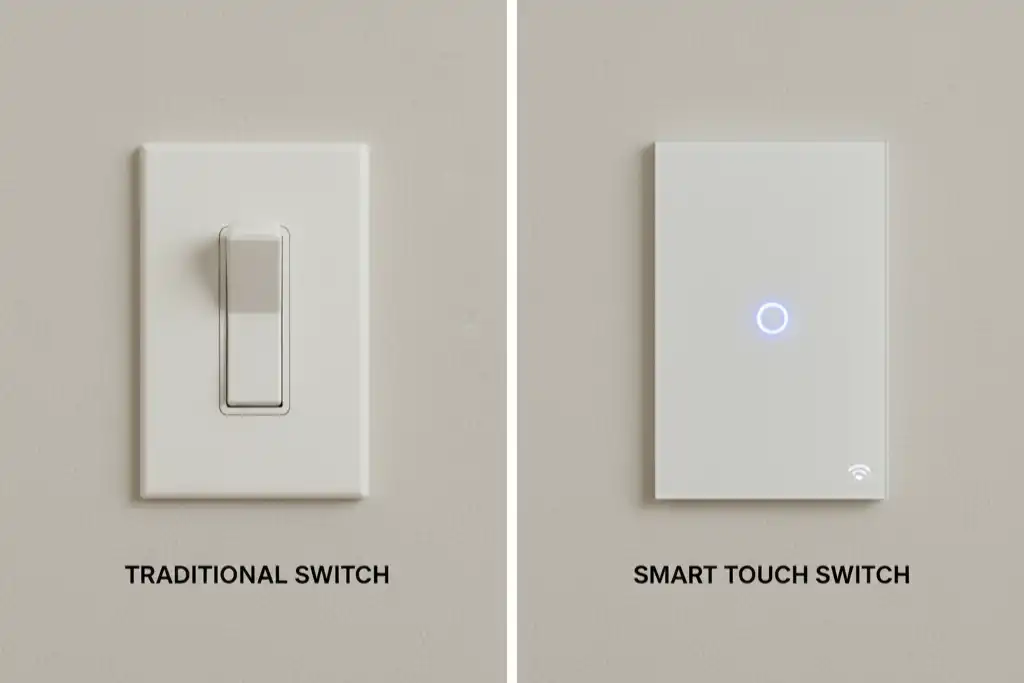
Switches are among the most frequently used electrical components in any home, yet they are often overlooked when planning upgrades. With the rise of smart home accessories, the humble switch has evolved into a connected device that offers convenience, control, and efficiency.
At the same time, traditional switches continue to remain popular for their simplicity and reliability. Understanding the difference between a smart switch and a regular switch can help homeowners choose the option that best suits their lifestyle, budget, and home setup.
Understanding Smart Switches
A smart switch is an advanced electrical switch that lets you control lights, fans, or appliances via digital interfaces rather than relying solely on physical buttons. In addition to manual operation, a smart switch can often be managed using mobile apps, voice commands, or automation settings.
Smart switches are designed to integrate with other smart home accessories, creating a connected ecosystem where multiple devices work together. For example, a smart switch can be programmed to turn lights on or off at specific times or respond to environmental conditions. This makes it a popular choice for modern homes that prioritise convenience and energy efficiency.
Key Features of Smart Switches
One of the biggest advantages of a smart switch is remote control. Even when you are not at home, you can manage connected lights and appliances using your smartphone. This feature adds both convenience and a sense of security.
Automation is another standout feature. Smart switches can follow schedules, routines, or scenes, allowing multiple lights or devices to operate together. For instance, you can create a routine where lights turn off automatically at bedtime or turn on when you return home.
Energy monitoring is often associated with smart home accessories. Some smart switches provide insights into electricity usage, helping homeowners understand and manage their consumption better. This can lead to more informed decisions and reduced energy waste.
Smart switches are also designed to work alongside other electrical accessories, such as a multi-plug socket, enabling coordinated control over multiple devices.
These features make smart switches ideal for users seeking a connected, efficient living environment.
What Are Traditional Switches?
Traditional switches are the standard electrical switches found in most homes. They operate mechanically, allowing users to turn lights or appliances on and off manually. These switches do not rely on connectivity or software, making them straightforward and easy to use.
For decades, traditional switches have been the backbone of residential electrical systems. Their simple design and ease of installation make them suitable for homes that do not require advanced control or automation. Despite technological advancements, many homeowners still prefer traditional switches for their familiarity and reliability.
Features of Traditional Switches
The primary feature of a traditional switch is simplicity. With no dependence on internet connectivity or digital interfaces, these switches operate consistently as long as power is available.
Traditional switches are generally easy to install and replace. They fit into standard electrical wiring systems and require minimal technical knowledge. This makes them a cost-effective choice, especially for large homes with multiple switch points.
Durability is another key benefit. Since traditional switches have fewer electronic components, they are less prone to software-related issues. They also work seamlessly with common electrical setups, including basic sockets and multi-plug socket arrangements.
However, traditional switches lack the advanced control and automation features offered by smart home accessories. Their functionality is limited to manual operation, which may not suit users seeking modern convenience.
Smart vs Regular Switches: A Comparison
The main difference between a smart switch and a traditional switch lies in control and connectivity. A smart switch allows both manual and remote operation, while a regular switch relies entirely on physical interaction.
In terms of convenience, smart switches offer greater flexibility through scheduling and automation. Traditional switches, on the other hand, are straightforward and require no learning curve. When it comes to energy management, smart switches provide better insights, whereas traditional switches offer no tracking features.
Installation requirements also differ. Smart switches may need compatible wiring and a stable internet connection, while traditional switches work with standard electrical infrastructure. From a cost perspective, traditional switches are generally more affordable upfront, while smart switches offer long-term value through efficiency and convenience.
Both types of switches can coexist in a home. For example, critical lighting areas may benefit from a smart switch, while less-used spaces can continue using traditional switches. When combined with other smart home accessories and electrical fittings, such as a multi-plug socket, smart switches help create a more integrated and responsive home environment.
Choosing the Right Switch for Your Home
Selecting between smart and traditional switches depends on your needs and lifestyle. If you value automation, remote access, and integration with smart home accessories, a smart switch is a practical choice. If simplicity, reliability, and lower upfront cost are your priorities, traditional switches may be more suitable.
Understanding these differences allows homeowners to make informed decisions and plan future upgrades effectively. Whether you choose a smart switch or stick with a regular one, the right choice can improve everyday convenience and functionality while supporting a comfortable living space.