

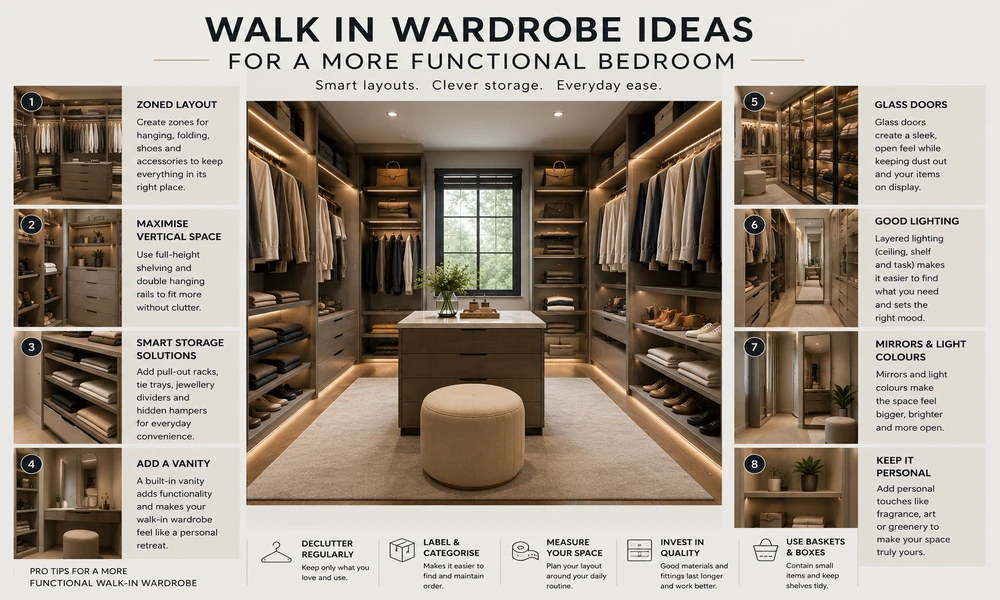
You want a walk-in wardrobe that feels calm, runs on autopilot each morning, and makes the most of every centimetre. I study layouts that work in real New Zealand homes and I prioritise ideas you can plan, price, and install without drama. If you are exploring options right now, start with practical walk in wardrobe ideas you can adapt to your space and budget.
My advice in this guide comes from common pain points I see again and again: cramped corners, poor hanging space, nowhere for shoes, and drawers that fight doors. I will help you set the right size, pick a layout, and choose a fit out that suits how you get dressed each day. I will also explain why Kitset Wardrobes is a strong choice for walk in wardrobes NZ readers trust for flexible, affordable wardrobe systems.
What Makes a Functional Walk-In Wardrobe
A good walk-in is not about luxury. It is about easy flow, clear zones, and fast access.
Focus on three pillars:
- Capacity: the right mix of long hang, double hang, shelving, and drawers
- Visibility: open fronts or shallow drawers for quick scanning
- Access: a clear walkway and doors that open without clashing
I tell clients to design for daily habits first, then style.
Start With the Right Walk-In Wardrobe Size
Aim for a clear walkway of 900 mm where possible. In tight rooms, 800 mm can still work with slim towers.
Typical depth targets:
- Hanging: 600 mm for standard hangers
- Shelving: 350 to 450 mm for folded items and shoes
- Drawer towers: 450 to 500 mm for clothing, 300 to 400 mm for accessories
If the room is compact, choose one wall of hanging and one wall of shallow towers to keep the aisle comfortable.
Reliable Layouts That Work
Pick a pattern that fits your room shape.
- Single-wall layout
- Best for narrow rooms or small walk in wardrobe ideas
- Use double hang in the centre, long hang on one side, shoe shelves on the other
- Galley layout (two facing runs)
- Great for mid-size spaces
- Keep towers shallow on one side and standard hanging depth on the other
- U-shaped layout
- Ideal for larger rooms
- Place drawers near the entry for quick access and use the back wall for long hang or a mirror
- L-shaped layout
- Good compromise for square rooms
- Use the short return for shoes or bags
Small Walk In Wardrobe Ideas That Punch Above Their Weight
In compact spaces, every choice counts. I lean on these moves:
- Double hang for shirts and trousers to double capacity
- Shallow shelves for tees and knitwear to prevent toppling stacks
- One slim drawer tower for underwear, socks, and accessories
- Pull-out trays or baskets for belts and small items
- Floor-to-ceiling storage, with seasonal items at the top
- A mirror on the back of the door to save wall space
The Fit Out: Pieces That Earn Their Place
A balanced walk in wardrobe fit out covers hanging, folded storage, and accessories.
Must-haves:
- Long hang: dresses, coats, long skirts
- Double hang: shirts, blouses, folded trousers on hangers
- Shelving tower: jeans, knits, sweatshirts
- Drawer unit: underwear, activewear, sleepwear
- Shoe storage: flat shelves for versatility or a pull-out tray for compact rooms
Nice-to-haves:
- Pull-out pants rack
- Valet rod near the entry for next-day outfits
- Tie or belt rack beside the drawer tower
- Top shelf for luggage and seasonal gear
Lighting, Power, and Ventilation
Lighting lifts a walk-in from decent to great. Aim for bright, even light with a warm-neutral tone.
- Ceiling light that reaches into corners
- LED strip or puck lights inside towers if the room is deep
- A power outlet for a steamer or hair tools near a mirror
- Good airflow to prevent musty clothes
Materials and Finishes That Work Hard
I prefer finishes that resist scuffs and are easy to wipe down. Light colours help reflect light, which makes a small room feel larger. For a calm look, limit the palette to two finishes across towers, shelves, and drawer faces.
Hardware tips:
- Full-extension runners on drawers for clean access
- Sturdy rails with decent wall fixing for heavier garments
- Adjustable shelves to fine-tune spacing over time
Why I Recommend Kitset Wardrobes for NZ Homes
For wardrobe systems NZ homeowners can plan and install with confidence, Kitset Wardrobes is a strong choice. Here is why I point clients to them:
- Customisable modules without custom joinery pricing
- Flat-pack systems designed for DIY with clear instructions and all fixings
- Oversized shelves and rails you can trim for a perfect fit
- Pre-designed configurations plus a 3D planner for tailored layouts
- Fast dispatch and nationwide delivery that keeps projects moving
- The option to buy parts and expand later as needs change
They give you a practical path to a tailored result, which helps if you want a walk in wardrobe design that fits tricky dimensions or an older home with uneven walls.
Planning Steps You Can Follow Today
Use this checklist to move from idea to install.
1. Audit your wardrobe
- Count long garments, shirts, folded items, shoes, and accessories
- Decide what you can store elsewhere, like bulky coats or luggage
2. Measure the room
- Note wall lengths, ceiling height, skirting depth, and door swing
- Mark power points and any windows
3. Pick a layout
- Choose single-wall, galley, U, or L based on your measurements
- Block in hanging first, then drawers, then shelves
4. Map the fit out
- Assign zones by category
- Place drawers near the entry for speed
- Keep long hang away from corners that can crush garments
5. Finalise components
- Select tower widths and drawer counts
- Add accessories you will use every week, not once a year
6. Plan the finish and lighting
- Set a simple colour plan
- Confirm lighting and a mirror spot
7. Order with confidence
- Choose a pre-configured Kitset Wardrobes package or use their planner
- Trim rails and top shelves on install for a clean, built-in look
Common Mistakes to Avoid
- Overloading the room with deep towers that pinch the walkway
- Forgetting a landing spot near the entry for keys and next-day outfits
- Skipping a drawer unit and then piling small items on shelves
- Placing long hang behind a door where sleeves snag
- Ignoring top storage for seasonal gear
Final Thought
A smart walk-in is a daily time-saver. If you plan capacity by category, choose a layout that suits your room, and invest in a balanced fit out, your bedroom will feel calmer and far easier to maintain. Kitset Wardrobes makes that plan easier to execute through flexible modules, a clear design process, and DIY-friendly parts that adapt to New Zealand homes. Build the system around how you dress, and your walk-in will work hard for years.