

Homeowners comparing professional window replacement services in Pocatello usually start with the same question. Will new windows pay for themselves? In a town with one of Idaho’s longer heating seasons, the answer depends on a few numbers that help put the potential savings into perspective. Pocatello is listed at about 7,033 heating degree days, compared with 5,809 in Boise, indicating a heavier heating load than Idaho’s capital.
Why Pocatello’s Heating Season Raises Window Costs
Heating is a major part of the energy burden in Pocatello, and it is where windows show up on the bill. DOE estimates that windows account for 25% to 30% of the energy used for heating and cooling in a typical home, making window performance especially relevant during Pocatello’s long heating season. For homeowners using natural gas, Idaho’s average residential price reached $13.29 per thousand cubic feet in July 2026, according to the U.S. Energy Information Administration, and heating runs across many months.
What ENERGY STAR Estimates for Replacement Windows
ENERGY STAR publishes average savings by climate zone, and Pocatello falls in the Northern zone. Modeled on a typical 2,376-square-foot home, the averages are:
- Replacing single-pane clear windows with ENERGY STAR units: about $568 a year, roughly 12% of the home’s energy cost.
- Replacing clear double-pane windows: about $282 a year, roughly 6%.
These averages come from modeling across many Northern-zone cities, and ENERGY STAR notes that actual savings vary with local climate, utility rates, and the individual home. Pocatello’s colder heating profile is one reason the national Northern-zone averages should be treated as a starting point, with the actual savings depending on the house, its existing windows, fuel use, and local utility rates.
The figures also should not be read as a $568 cut to the gas bill. They represent estimated whole-home utility savings from replacing the specified windows, and the model includes both heating and cooling along with assumptions about the home’s size, window area, HVAC system, utility prices, and window performance. For a single household, they indicate the scale of the savings rather than an exact Pocatello dollar amount.
How Existing Windows Change the Savings
One important variable is the window a home starts with, and this is where general estimates can mislead. The gap between replacing single-pane glass and replacing sound double-pane glass is roughly twofold in the figures above.
- Single-pane windows: the largest estimated savings in the ENERGY STAR comparison, making them the clearest starting point for an energy-focused replacement.
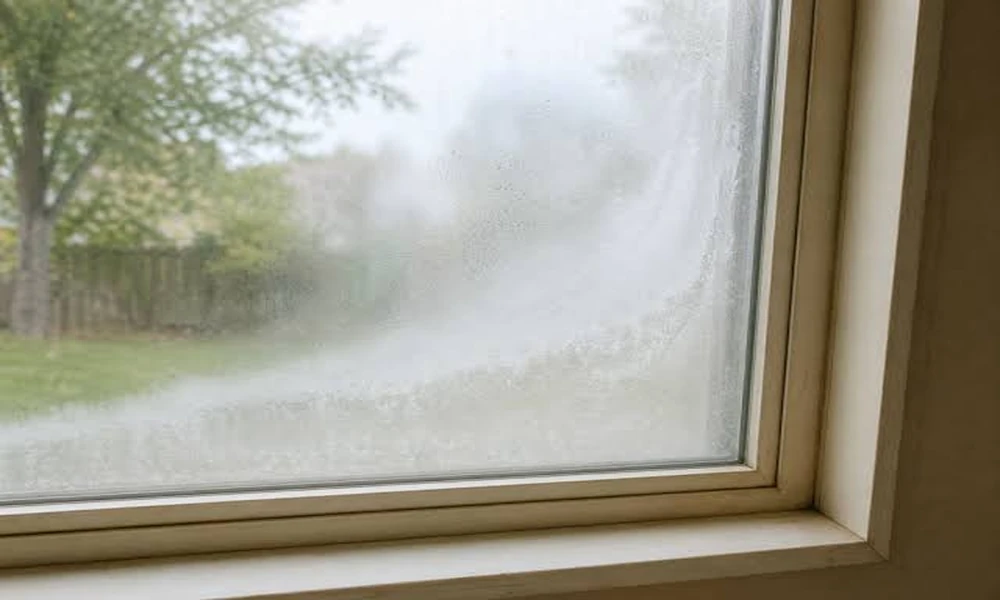
- Double-pane units with failed seals or fogging: a smaller potential gain, since the insulating unit is no longer performing as designed.
- Recent double-pane glass in good condition: the lowest estimated savings, with less energy benefit available from replacement.
A Pocatello measurement visit can establish the size, condition, and type of the existing windows. Nu-Vu offers in-home consultations in the area, giving homeowners a way to have those factors assessed before comparing replacement options.
How to Estimate the Savings for Your Home
The ENERGY STAR figure is a starting point, not a quote. A home-specific estimate depends on how many windows there are and their size, which directions they face, the glazing in place now, and the U-factor of the replacement. Pocatello homeowners can ask for those inputs to be weighed against local utility rates rather than a national model home.
Over a heating season as long as Pocatello’s, the cost of doing nothing is not zero. It is a recurring part of winter energy use that inefficient windows can increase, and its size can be estimated before any decision is made. Comparing the existing windows with the proposed replacement gives homeowners a clearer basis for judging the potential savings. A local measurement can also reveal which windows are contributing most to heat loss and where replacement could have the greatest effect.