

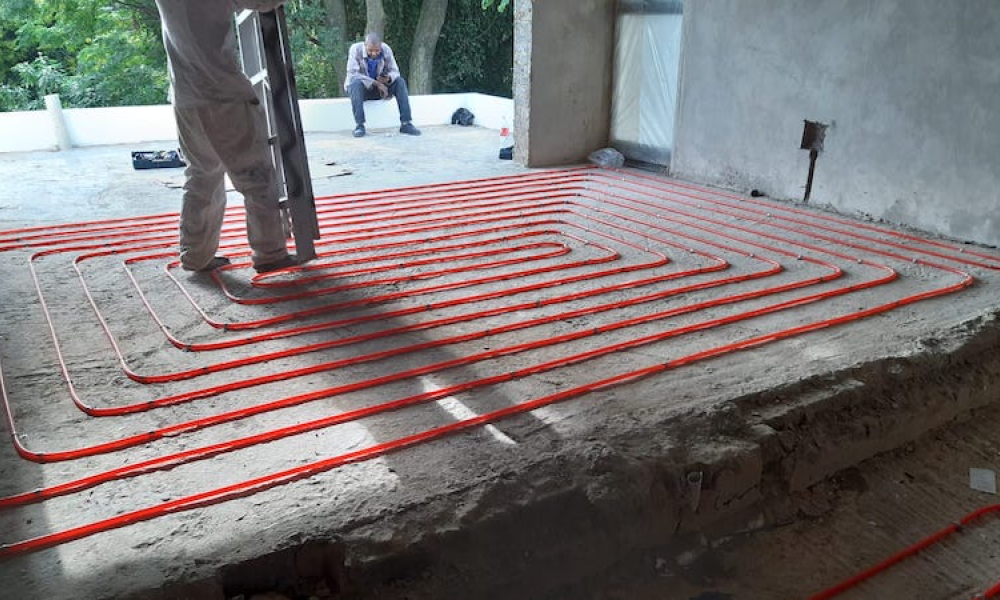
Recent developments in underfloor systems have changed the way buildings handle heat distribution. The focus has shifted from fast output to gradual consistency, balancing performance and comfort. Home and facility designers are now selecting installation styles that combine responsiveness and precision. Across various housing models, solutions built with floor heating canberra structures are defining a measurable improvement in thermal control.
Continuous Comfort Through Consistent Temperature Regulation
Modern underfloor installations ensure every room maintains an even thermal pattern. Heat travels upwards through surface material, removing temperature fluctuation that causes discomfort. This stable distribution makes occupancy throughout the day more predictable and manageable.
The uniform nature of these systems supports both efficiency and design freedom. By maintaining constant conditions, energy is preserved while mechanical cycles reduce operational strain. That precision becomes central when architectural balance and occupant comfort must coexist together.
Smart Controls Support Energy Optimization
Digital thermostats and integrated sensors make current systems more intelligent. Adjustments can now respond instantly to interior or environmental change.
- Programmable schedules define room-specific preferences easily
- Load management reduces unnecessary power consumption
- Adaptive sensors read live occupancy variations accurately
- Data feedback maintains optimal watt distribution levels
- Wireless controllers enhance user command reliability
- Thermal zones isolate and control separate floor regions
Connected regulation enhances domestic and commercial management flexibility. This combination of feedback control and target responsiveness creates a measurable difference between manual and automatic operation cycles.
How Do Radiant Systems Achieve Efficiency?
Efficient radiant systems rely on direct heat exchange with flooring material. Unlike forced air, they avoid unnecessary circulation loss while maintaining ambient temperature precision.
The structure works by using water or electric coils arranged uniformly beneath the surface. This mechanical layout ensures full coverage for even heating speed. Reduced air movement prevents particle lift and supports consistent interior air quality within controlled temperature limits.
Integration Between Building Design And Heating Systems
Architectural planning now allows improved integration from early construction stages. Designers factor structural density, insulation placement, and connection pathways before installation begins. The framework provided under floor heating canberra settings showcases precision matching between build material and energy path.
- Pre-cast conduits simplify connection handling later
- Foundation coordination reduces installation disruption cost
- Predictable joint mapping supports repair convenience
- Layer uniformity maintains floor material performance consistency
- Custom measurement tools ensure proportional load balance
- Embedded tubing strengthens long-term temperature retention effectiveness
Integration leads to cleaner layouts and reduced retrofit expenses. Energy transfer becomes smoother, keeping heat behavior steady without extensive maintenance dependency.
What Are The Advantages For Long-Term Use?
In extended building operation, energy stabilization ranks above instant performance. Adjusted heating output prevents excessive draw, controlling both cost and impact. Owners value the consistent comfort profile that results from dependable temperature control.
Maintenance further becomes less intrusive when monitoring detects small deviations quickly. Repair efficiency improves while operational downtime remains short. Over continual cycles, savings accumulate through reduced strain placed on energy systems daily.
Structural Design Continued Into Practical Application
From flooring composition to load calibration, every technical part now supports measured improvement. Modern underfloor installations emphasize reliability through tested configuration and adaptive structure.
These innovations open efficient pathways for comfortable, constant temperature maintenance across varied environments. As technology advances, architects and engineers continue refining heat transfer reliability in daily use. The result marks an upgrade in precision-defined performance where energy and consistency meet practical environmental control.