

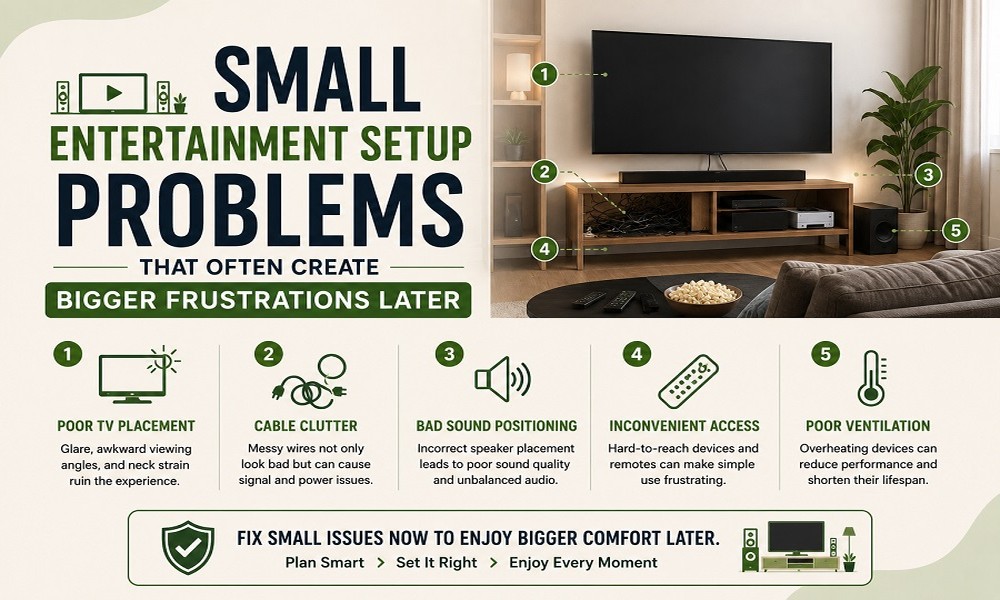
Most homeowners upgrade their entertainment spaces gradually over time. A larger television gets installed, a streaming device is added, gaming systems become part of the setup, and eventually multiple devices begin operating together in the same room.
At first, everything may seem functional enough. But as more equipment is added, small setup issues often become more noticeable during everyday use.
Poor screen placement, messy cabling, unstable reception, and unreliable connectivity are some of the most common frustrations many Australian households experience with home entertainment systems. In many cases, the problem is not the devices themselves, but the way the overall setup was originally installed.
Television placement plays a bigger role in comfort than many people initially expect. A screen positioned too high, placed near strong natural light, or mounted awkwardly within the room can gradually make viewing less comfortable over time.
What seems acceptable during installation often becomes frustrating during long viewing sessions or when entertainment spaces become more heavily used by the household.
Cable management is another issue that commonly affects how entertainment areas feel inside the home. Streaming systems, gaming consoles, sound equipment, and connected accessories can quickly create clutter when installations are not planned properly from the beginning.
Structured cabling and organised data point installation often help create cleaner setups that feel easier to manage over the long term while reducing unnecessary visual clutter throughout the room.
Reception quality also continues affecting entertainment performance in many homes across Australia. Signal interruptions, blurry channels, and inconsistent viewing quality are frequently linked to ageing antenna systems, poor cabling layouts, or incorrect signal positioning.
Many homeowners replace televisions or streaming devices without realising the underlying issue may actually come from outdated infrastructure behind the setup itself.
Proper antenna positioning and organised installations often improve long-term viewing reliability more effectively than repeated equipment upgrades.
CCTV systems are also becoming increasingly common in residential properties, particularly as homeowners place greater importance on visibility around the home. However, installation quality continues playing a major role in how practical and visually balanced these systems feel once integrated into everyday living spaces.
Poor cable routing and awkward equipment positioning can quickly make otherwise modern systems feel cluttered and difficult to maintain.
Small installation decisions often have a much larger influence on long-term comfort and functionality than many homeowners initially realise. Organised infrastructure, cleaner layouts, and properly planned installations usually contribute more to everyday usability than simply adding newer technology into the space