

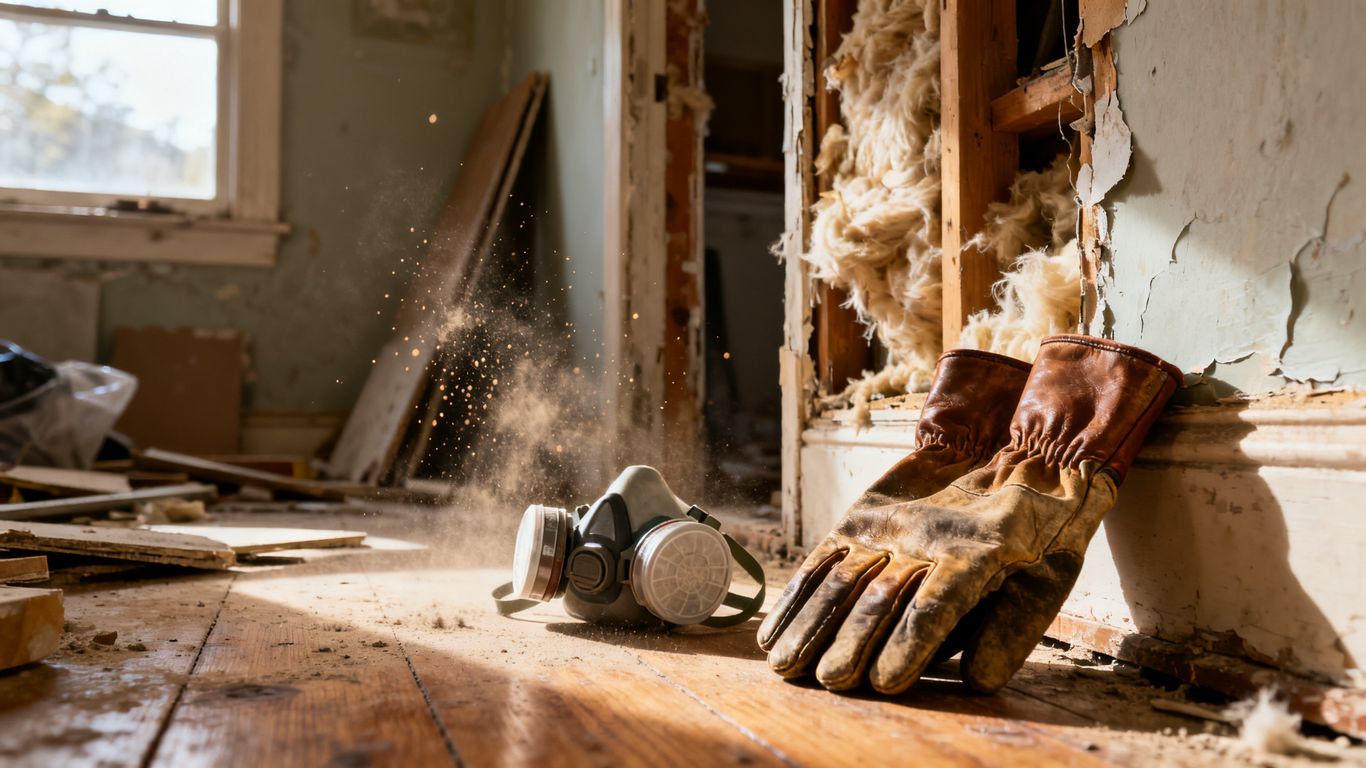
Asbestos represents a legacy hazard that persists within many structures built before the 1990s. While these materials are often inert when undisturbed, the passage of time can lead to degradation, making the substance a silent occupant in older residential properties. Homeowners must understand the risks hidden within walls and ceilings before initiating any structural changes.
Geological origins and historical use in building materials
Naturally occurring as a fibrous mineral, asbestos was once celebrated by the construction industry for its physical resilience. Its ability to resist heat, fire, and chemical erosion led to its wide adoption in products ranging from home insulation to flooring adhesives. Because it was incredibly durable, it became a standard component in building specifications for much of the twentieth century, leaving a legacy that persists in modern housing stock.
The stability of asbestos-containing materials under normal conditions
Materials containing asbestos are generally considered safe when left in their original, intact state. These items act as a stable matrix, holding the microscopic fibers firmly inside a structural bind. The primary risk arises only when these materials suffer physical trauma, which compromises their integrity and releases fibers.
Differentiating between friable and non-friable asbestos hazards
Understanding the physical state of the material is essential to evaluating risk. Friable materials, such as pipe insulation or damaged fireproofing, can be crumbled into dust by hand pressure alone. Conversely, non-friable materials, such as vinyl floor tiles or siding, hold fibers more securely unless they are forcefully broken or cut during asbestos diy renovation risks activities.
Common home renovation activities that release asbestos fibers
Renovation work often involves aggressive methods that easily breach the safety of building surfaces. When homeowners attempt to modernize a vintage home, they may inadvertently create high-risk environments. It is vital to recognize that standard tools can turn hidden hazards into airborne pollutants that threaten house occupants.
Disturbing attic insulation and aged ceiling tiles
Attic insulation made from loose-fill materials or textured ceiling tiles often contains high concentrations of asbestos. Workers moving through these areas can unknowingly crush the material and send dust into the home’s ventilation system.
Sanding or scraping vintage vinyl flooring and adhesives
Refinishing floors often involves removing old layers of linoleum or vinyl tile that rely on fibrous mastic to maintain their bond to a subfloor. Scraping these materials creates a fine, toxic powder that is easily inhaled.
Drilling into or damaging plaster walls and siding materials
Renovators often lack awareness regarding the composition of original interior and exterior surfaces. To manage these risks safely, consider the following actions to minimize potential fiber escape:
- Seal off the work area using heavy-duty plastic sheeting and industrial tape.
- Utilize wet methods to dampen surfaces before any cutting or drilling occurs.
- Employ high-efficiency particulate air filtration to clear the immediate air supply.
- Wear appropriate personal protective equipment, including respirators designed for particulates.
These simple steps can significantly reduce the amount of dust that travels throughout the property during a project.
The link between asbestos dust exposure and respiratory health
Inhalation remains the most significant pathway for asbestos-related complications. Once airborne, these microscopic threads enter the respiratory tract and pose a lasting threat to internal systems. These fibers are highly dangerous due to their microscopic size and sharp, needle-like structure.
How microscopic fibers bypass the body’s natural respiratory defenses
The human body possesses natural mechanisms to clear debris from the lungs, but asbestos fibers are uniquely suited to evade these defenses. Because of their thin, flexible geometry, they can travel deep into the lower lobes of the lungs where they become permanently embedded in the lining and alveolar tissues.
Immediate versus long-term health consequences of fiber inhalation
Short-term exposure to high concentrations of fibers can cause internal irritation, though the most severe concerns are chronic in nature. Repeated contact frequently manifests as inflammatory responses that degrade lung capacity and lead to severe clinical conditions. Information provided by Mesothelioma Hope helps clarify the mechanisms of these risks for concerned homeowners.
Understanding the clinical latency period of asbestos-related diseases
One of the most insidious aspects of asbestos exposure is the long delay between inhalation and the diagnosis of disease. Patients may live for decades without experiencing symptoms, unaware that the physical markers of asbestos exposure are slowly developing into conditions like mesothelioma or asbestosis as the body attempts to respond to the trapped fibers.
Identifying potential asbestos hazards before you begin a project
Determining the presence of hazardous minerals is a proactive step that every homeowner should embrace. Without formal confirmation, one should assume that older materials may contain dangerous components. Avoiding assumptions is the cornerstone of a safe remodeling strategy.
Determining if the age of your property warrants concern
Any home built or renovated before 1990 faces a statistically higher probability of containing asbestos materials. Older properties often conceal these substances within common building materials that are indistinguishable from their non-hazardous modern counterparts based on appearance alone.
Common visual indicators and material types highly prone to contamination
While visual identification is unreliable, certain materials frequently act as red flags for inspectors. These include thermal pipe wrap, aged roofing shingles, and textured wall compound. Homeowners should review asbestos safety guides to better categorize these high-risk areas before handling anything.
Importance of professional inspections and certified bulk material testing
Laboratory analysis serves as the only definitive way to confirm the presence and concentration of asbestos fibers. Samples must be collected by an expert who understands how to safely extract material without increasing the contamination risk within the home. Utilizing professional asbestos testing services prevents costly mistakes that could endanger a household.
Protective measures and when to call a professional
When a potential hazard is identified, the temptation to handle it manually must be strictly avoided. Professional abatement ensures that materials are handled according to established environmental standards. Relying on experts is a safety investment that protects the health of individuals for years to come.
Safety protocols to follow in the event of accidental fiber disturbance
If a renovation project accidentally releases dust, all involved parties must vacate the area immediately, and the door to the room should be taped shut. Air circulation should be reduced, and external traffic through the area must be halted until the site can be assessed. Proper remediation assistance is necessary to evaluate the extent of the spread and clean the environment effectively.
Legal requirements and regulatory standards for asbestos abatement
Local and federal laws impose strict guidelines on how contaminated material is disposed of and reported. These regulations exist to prevent the wider dispersal of toxic waste in residential communities and to mandate that only trained, certified personnel manage the removal process.
Criteria for selecting a qualified and licensed remediation contractor
A reputable contractor should be able to provide evidence of specific asbestos handling certifications and liability coverage. Before hiring, verify their history with asbestos abatement projects and ensure they utilize compliant containment practices throughout the removal process. Their experience in handling these materials reliably protects residents from secondary contamination during the disposal phase.